
C-CDA Interoperability Hub overview
This product brings healthcare document processing stages into one controlled workflow so teams can create, inspect, exchange, reconcile, and trace C-CDA information with defined review points.
Practical scope
- C-CDA document generation and validation workflows
- Import and reconciliation support
- Audit-aware healthcare data handling
- Direct and FHIR-oriented workflow support where applicable
Implementation approach
C-CDA workflow planning distinguishes generation, validation, import, reconciliation, audit, and exchange responsibilities. Representative documents and expected validation outcomes are required for useful testing.
Safeguards
Healthcare document controls should protect access, validate structure and required content, preserve processing history, surface reconciliation differences, and keep uncertain records in an authorized review path.
Best next step
Provide representative C-CDA files, intended document types, source and destination systems, validation expectations, reconciliation rules, authorized users, and available test interfaces.
Verified Product Screenshots
Screenshots and gallery
These screenshots are loaded from the matching portfolio repository for C-CDA Interoperability Hub.
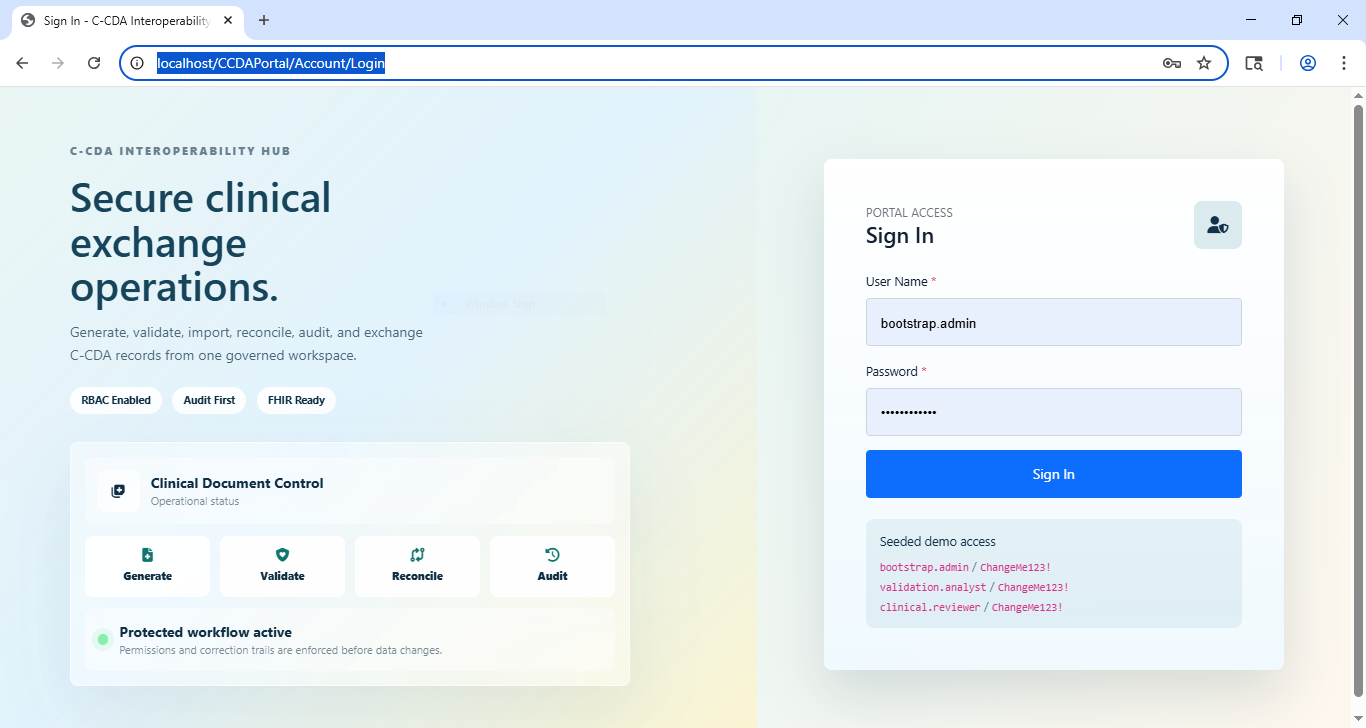
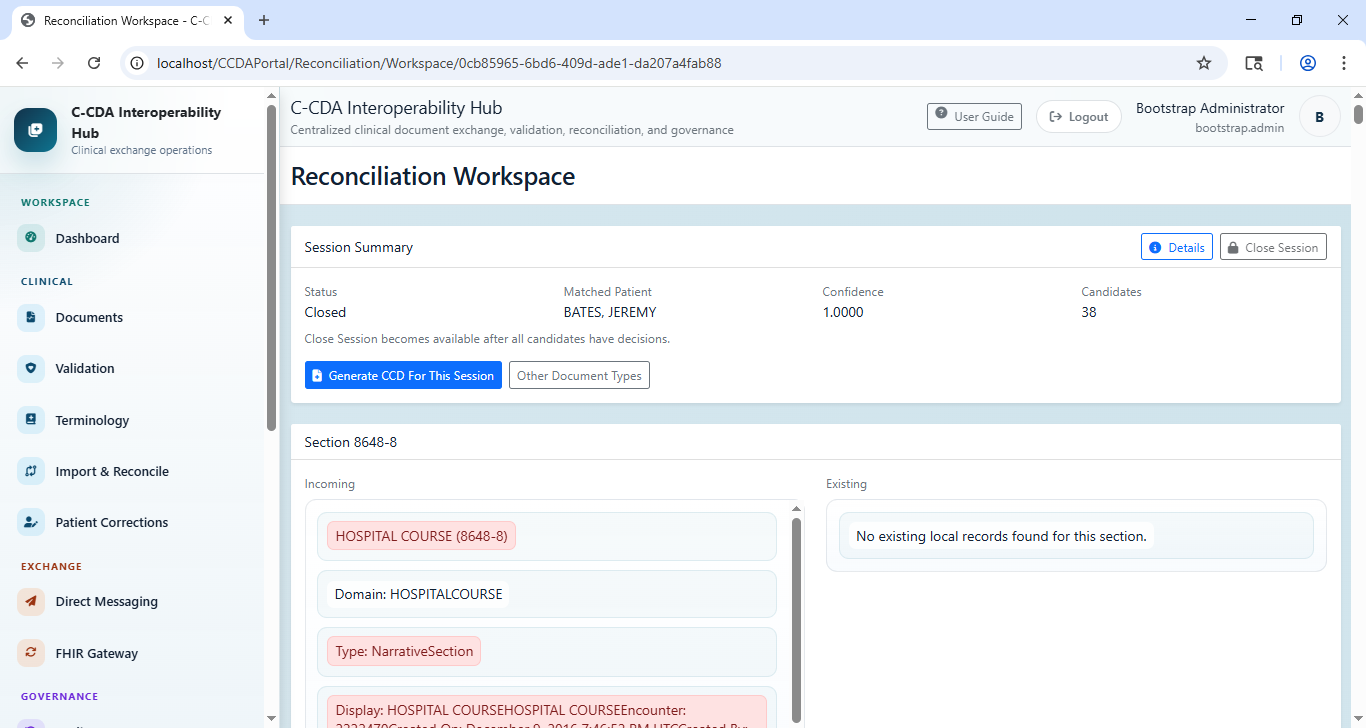
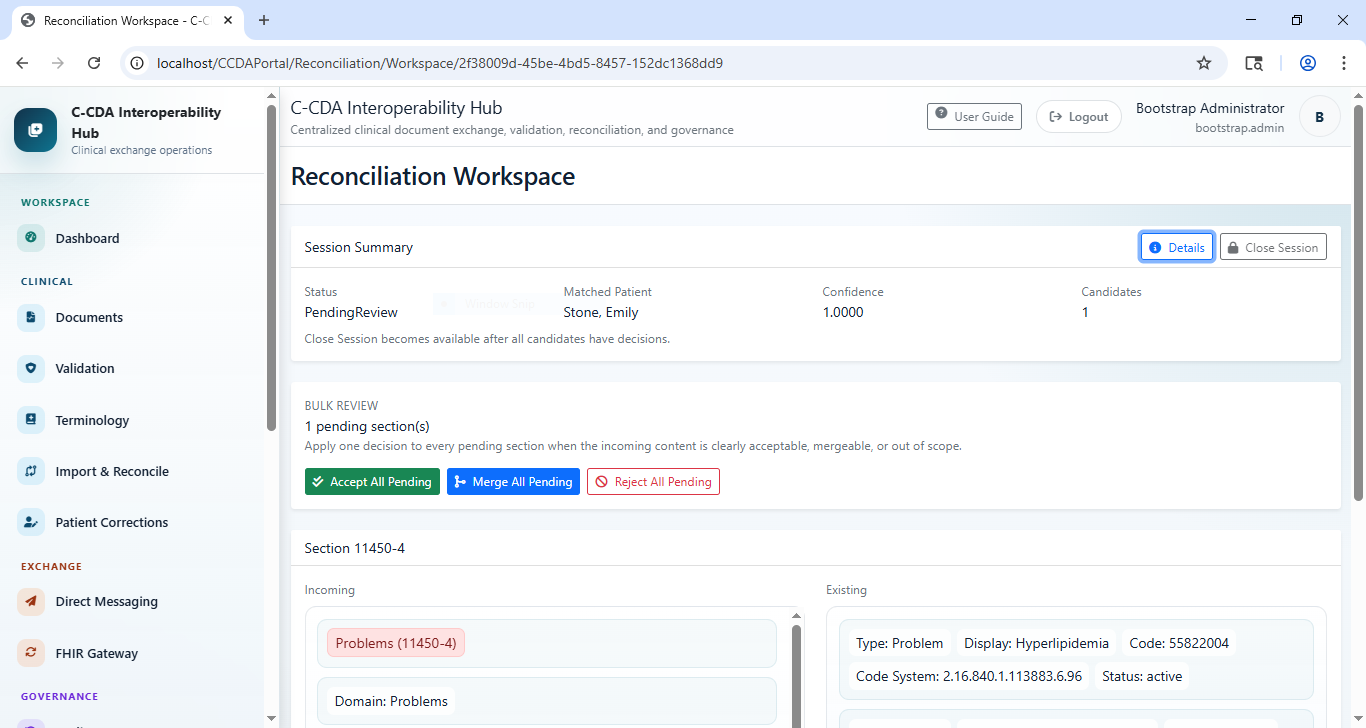
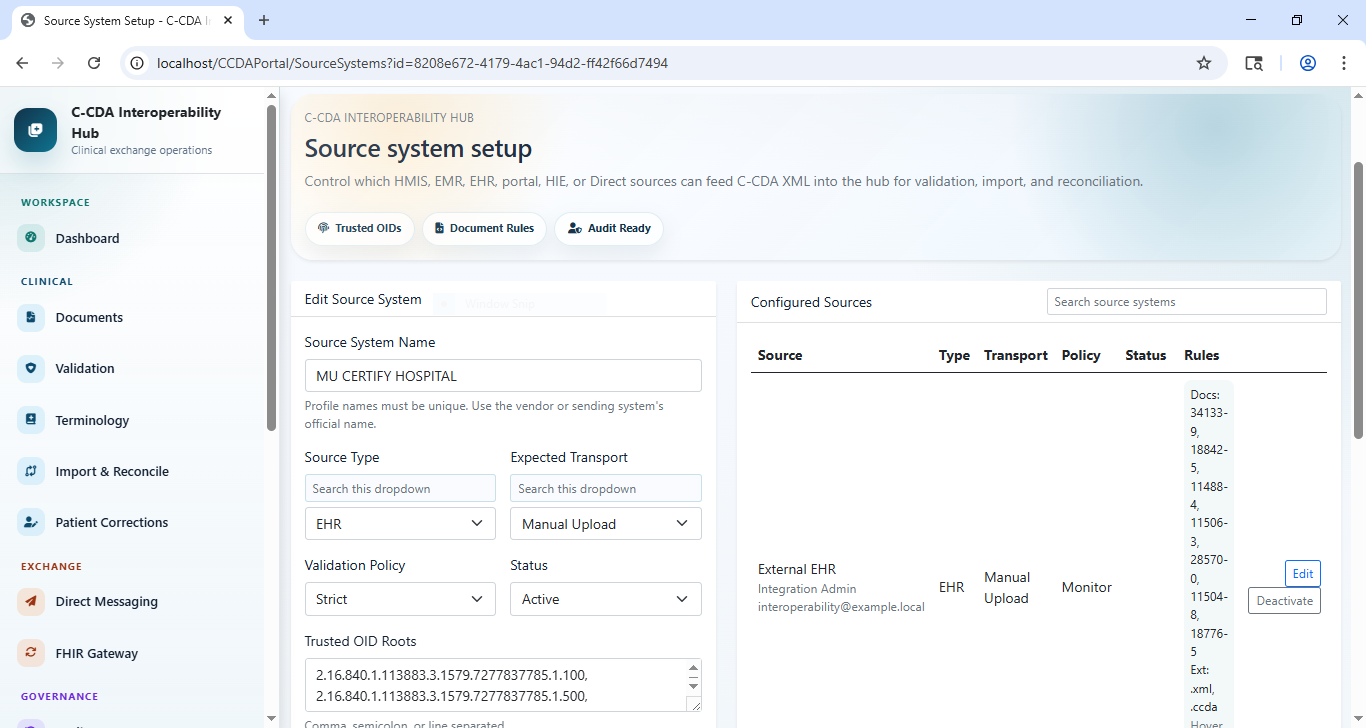
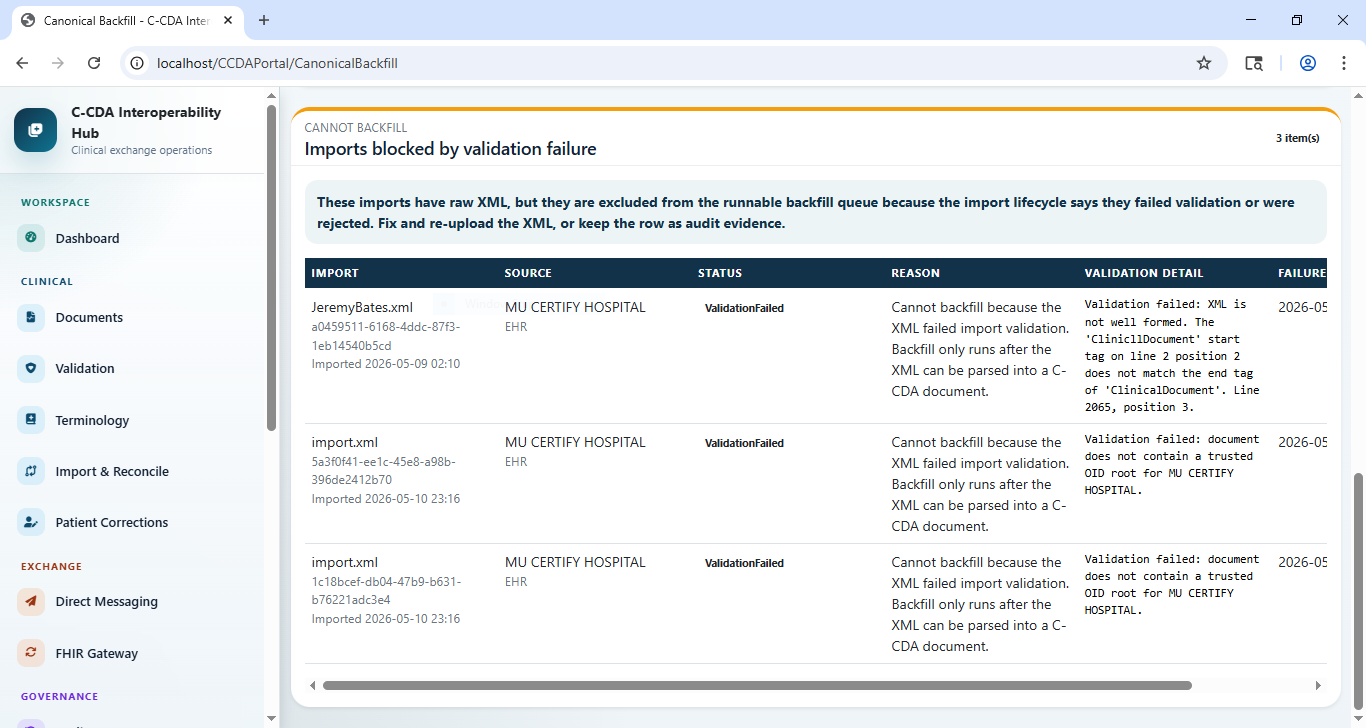
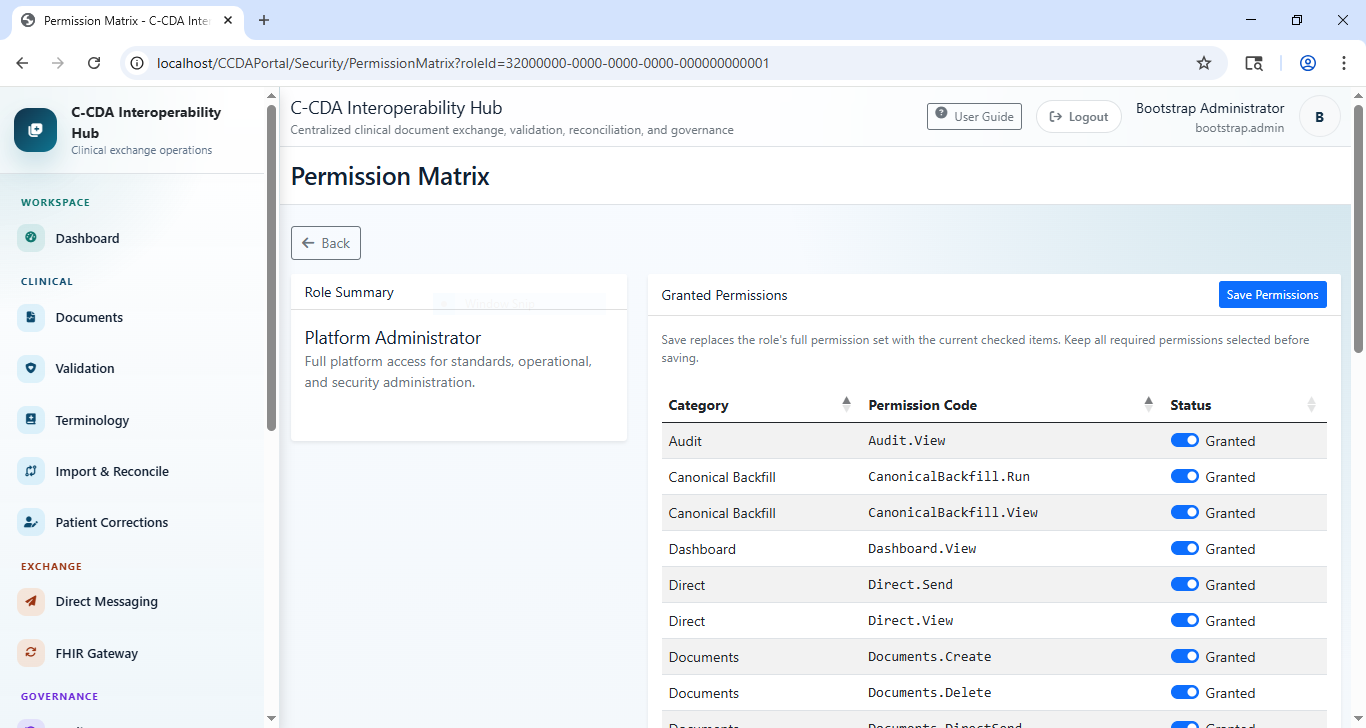
C-CDA interoperability connects clinical document creation, validation, exchange, and review. The i-360 C-CDA Interoperability Hub is a documented product example for these workflows, including import, reconciliation, audit, and Direct/FHIR-oriented integration foundations.
Clinical document interoperability
A clinical document carries more than a collection of fields. Its structure, sections, identifiers, narrative, codes, and references need to be interpreted in the receiving workflow. C-CDA integration begins with the intended document type, supported implementation requirements, and available examples.
The project defines who creates the document, who validates it, how it is transmitted, and who resolves differences after import. This separates document generation from the operational decision to accept information into a receiving system.
Generation and validation
C-CDA development can map application data into the agreed clinical document structure and validate the resulting output. Required sections, fields, codes, and identifiers are documented with the source-to-document mapping.
Validation results need to be understandable to the team responsible for correction. A technically accepted document does not by itself prove the underlying clinical content is complete or correct. Representative documents and expected outcomes are required for testing.
Import, reconciliation and review
Incoming documents need identity matching, source tracking, validation, and a defined import path. Reconciliation exposes differences for authorized review instead of silently overwriting information. Duplicate documents and ambiguous patient matches require explicit handling.
Audit events record the processing and review actions needed for traceability. Access restrictions and payload visibility are designed around the intended users and sensitive information. The existing product screens and live link provide a concrete reference for discussion.
Connect documents with APIs and FHIR
Healthcare interoperability may combine document exchange with resource APIs and other messages. Mapping between C-CDA and FHIR requires an explicit decision about meaning, references, terminology, and fields that do not map directly.
Review FHIR development services for resource-based integration and healthcare API integration services for the surrounding authentication, transport, validation, and monitoring architecture.
Scope an implementation
Bring de-identified documents, the required document types, source and destination systems, validation expectations, identity rules, exchange method, and available test environments. An engagement can assess the documented product, implement a specific interface, or develop additional workflow requirements.
Acceptance should cover valid and invalid documents, duplicate handling, matching exceptions, reconciliation decisions, audit visibility, and recovery after a failed exchange. Certification and regulatory obligations require separate assessment; no automatic compliance outcome is claimed.
Questions before you start
Is C-CDA exchange the same as a FHIR API?
No. C-CDA is a clinical document approach, while FHIR provides resource-based exchange patterns. A project may use both, with explicit mapping and integration responsibilities.
Can imported content be reconciled before acceptance?
The documented product includes reconciliation-oriented workflows. The required matching, review and acceptance behavior is confirmed for the deployment.
What examples are needed to assess an interface?
Provide de-identified documents, expected validation outcomes, source and destination requirements, identity rules and the intended exchange workflow.
Related services and product examples
Define a useful next step.
Share the current workflow, systems, constraints, and result you want to review. We will discuss an appropriate scope and the inputs it needs.